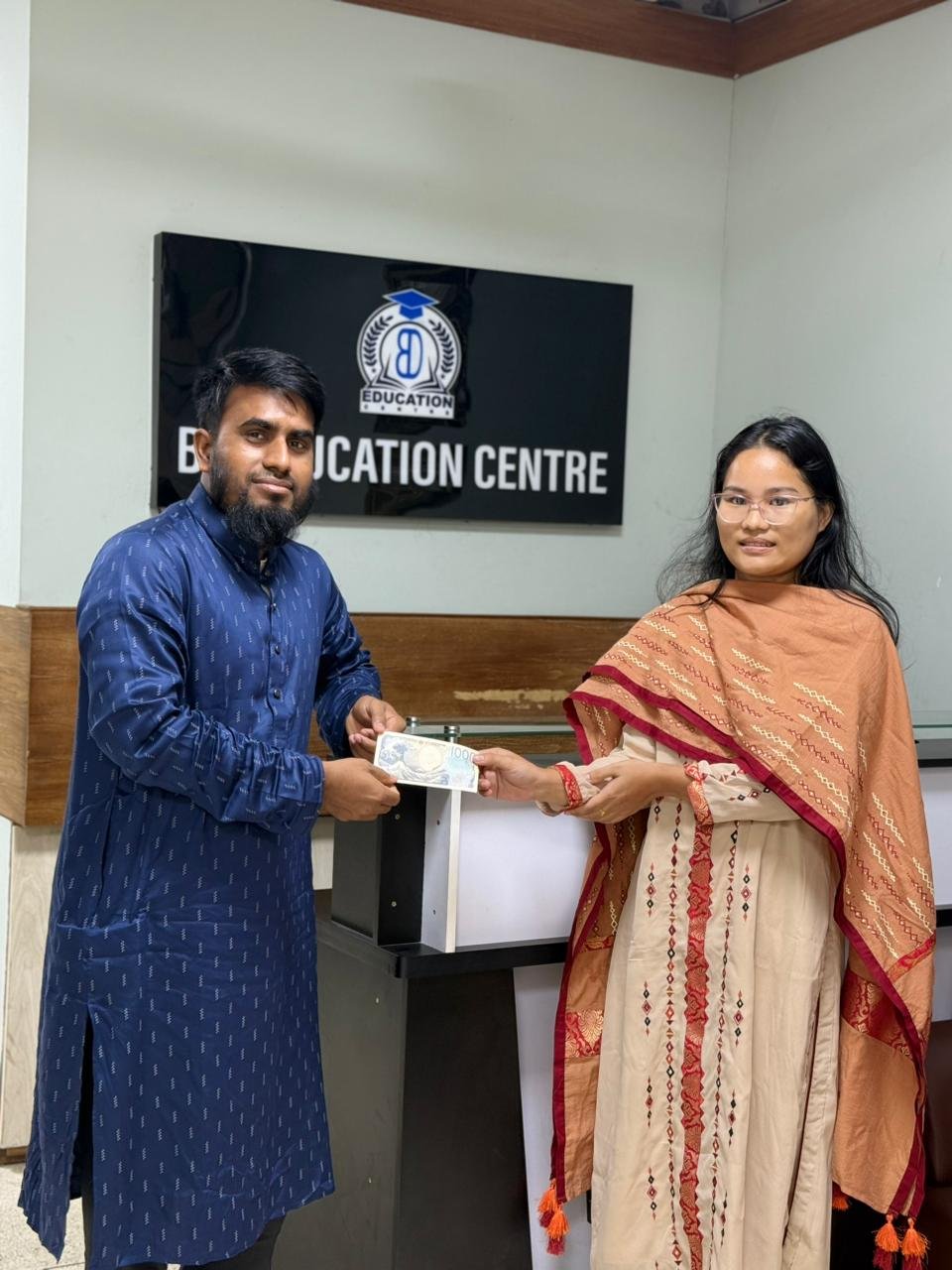
Name of Language Institutes
- Three H Japanese Language School, Chiba, Tokyo
- JOTO Japanese School, Nishikameari, Tokyo
- OJI Language School, Tokyo
- Umikaze Academy of Japanese Language, Osaka
- Kinoshita Campus Japanese Language School, Tokyo
- OJI Language School, Saitama
- Kokusho Japanese Language School, Tokyo
- Kasuga Japanese Language Academy, Kobe
- NPO Asian House Institute, Osaka
- An Language School, Tokyo
- Nagoya Advance Academy, Nagoya
Universities after Language Course
- The University of Tokyo
- Tokyo Institute of Technology
- Osaka University
- Doshisha University
- Waseda University
- Yokohama National University
- Kokusho Japanese Language School, Tokyo
- Kasuga Japanese Language Academy, Kobe
- Sophia University
- Ritsumeikan Asia Pacific University (APU)
- Kyoto University
- Meiji Gakuin University
Why BD Education Centre?
- School Interview training & Interview arrangement
- Document processing & Japanese translations
- FedEx/DHL/Courier cost
- International Student Account file opening
- Embassy interview training & File processing
- Airport pickup in Japan
- Accommodation arrangement in Japan
- Health Insurance & Residence Permit in Japan
- Part-Time Work Permit & job assistance

Why Japan?
Japan has boomed, and is yet still booming – it has an increasingly fast-paced economy (it’s currently the world’s third-largest) and its social system has advanced at an incredible rate as a result. Practically speaking, this means the educational systems are brand new and streamlined, the infrastructure of the cities is advanced, and the entire country is safe, wealthy and welcoming. It’s a great place to move to even if you’re not studying.
- Part-time job availability
- Students can work up to 28 hours part-time job per week
- Students can work full time during vacation
- Full Time Job after finishing study
- Easy to get visa, Permanent Residency (PR) & Citizenship
- Students do not need to take money from home after going to Japan
- High standard education & Scholarship availability
Area of Study
There are more than 700 universities in Japan. Almost every subject in the world is available in these universities. The major areas of study in Japan are as follows –
- Japanese Language
- Arts and Humanities
- Medical, Clinical, Pre-Clinical and Health
- Engineering & Information Technology
- Business Studies
- Physical Sciences
- Social Sciences
- Life Sciences
Part Time Job Details
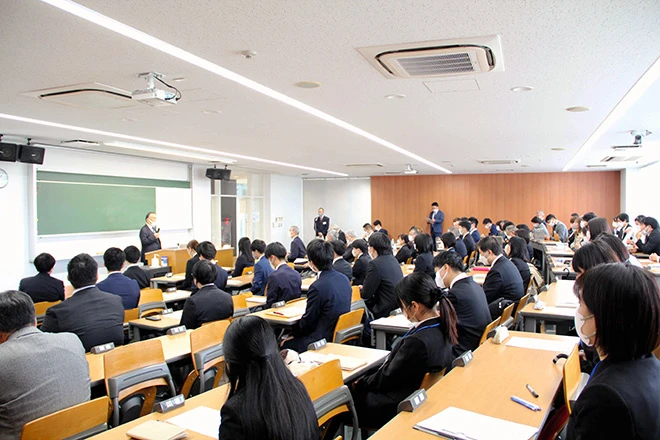
Students are allowed to work 28 hours per week in Japan during their semester period. But they can work full time during vacation. However, permission from Japan Ministry of Justice is required before starting part time work in Japan.
Bd Education Centre gets that permission for students after getting visa and students need to submit that letter to the airport immigration when they land in Japan. Bd Education Centre also assists students in getting part time job in Japan as quickly as possible. Bd Education Centre has very good contact persons and Bangladeshi community in Japan who helps Bd Education Centre students get part time job very quickly after landing in Japan.
Session In Japan
| Intake Session | Maximum Duration | Focus / Goal |
| April (Main) | 2 Years | Best for those aiming for top universities or starting from zero. |
| July | 1 Year, 9 Months | Ideal for students who graduated in June and want a quick start. |
| October | 1.5 Years | Popular for those wanting a balanced pace before university entry. |
| January | 1 Year, 3 Months | Best for those with existing intermediate Japanese (N3+). |
Key Requirements for Applicants:
To qualify for a long-term language program (Student Visa), applicants generally need:
-
Educational Background: Minimum of 12 years of formal education (High School diploma or equivalent).
-
Language Proficiency: Proof of basic Japanese knowledge. This is usually JLPT N5 level or a certificate showing at least 150 hours of study at a local language center.
-
Financial Solvency: A financial sponsor (usually a parent) must show a bank balance of at least 2,000,000 JPY (~$13,500 USD) to prove they can cover tuition and living costs.
-
Age: Generally 18–30 years old (though some schools accept older students if they have a clear career goal).
Estimated Costs (2026 Projections)
Costs vary by city (Tokyo/Osaka are more expensive than Fukuoka or Nagoya), but here are the general averages:
Tuition Fees
1-Year Tuition: 750,000 JPY to 850,000 JPY ($5,000 – $5,800 USD)
Application/Admission Fees: 70,000 JPY – 100,000 JPY ($470 – $675 USD)
Monthly Living Expenses
Rent (Dorm/Share house): 40,000 – 70,000 JPY
Food/Utilities/Transport: 50,000 – 70,000 JPY
Total: Approx. 100,000 – 150,000 JPY per month ($675 – $1,000 USD)
Our Sutdent Visa Success